
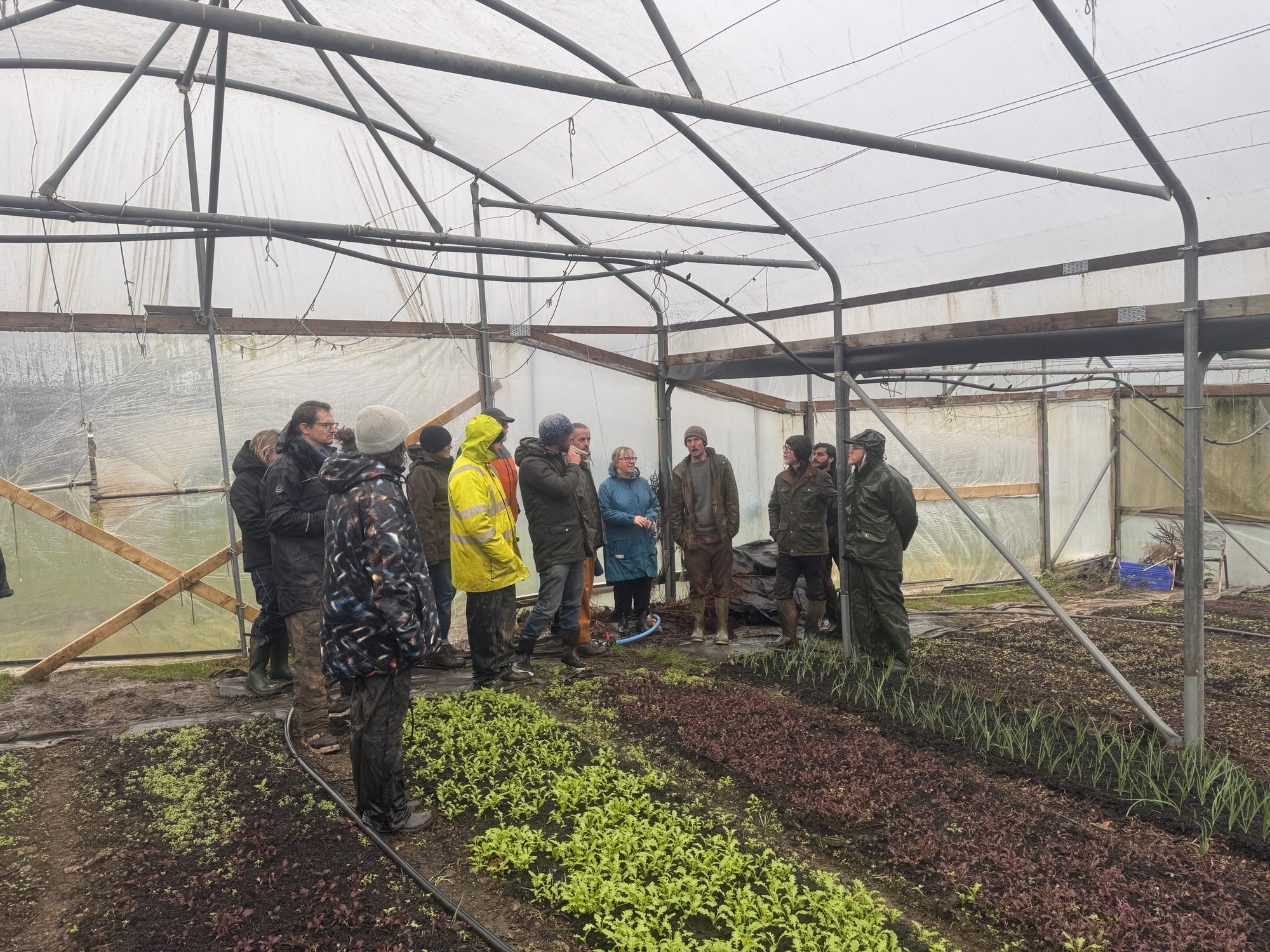
February was a busy and inspiring month for our Joining the Dots Peer-to-Peer programme, with three well-attended events bringing growers together to share skills, experiences and ideas. From scaling up agroecological production to exploring social prescribing and refreshing training skills, each event highlighted the power of learning from one another within Cornwall’s thriving community growing network.
Scaling up agroecologically – Mora Farm, Liskeard
We kicked off the month with a visit to Mora Farm, near Liskeard, where grower Oli Baker shared insights from more than a decade of experience.
Oli started Mora Farm 11 years ago with a vision to grow fruit, supported early on by funding from the Natoora Farm Fund. Since then, the farm has grown into a financially stable, organically certified enterprise supplying fruit and vegetables to a range of high-end wholesalers and restaurants in both London and Cornwall. Today, the business employs up to four people.
During the visit, Oli talked through his journey from starting out to building a productive and resilient farm business. Participants gained practical advice on scaling up agroecological growing, including tips on improving efficiency, choosing and using machinery, and saving time and effort when managing larger areas of land.
It was a valuable opportunity for community growers to hear first-hand what it takes to grow successfully at scale while staying true to ecological principles.
Social prescribing for community growers – Newquay Community Orchard
Our second event took place at Newquay Community Orchard, focusing on the growing role of social prescribing within community food projects. We were joined by an excellent panel of speakers:
- Claire Judd, from WellFed
- Emma Seward-Adams, Social Prescriber at Narrowcliff Practice
- Jenny, Manager at Newquay Community Orchard
- Mark, Community Grower at the orchard
The orchard provided a welcoming space for presentations followed by a lively question-and-answer discussion. Together we explored what social prescribing means for community growers and how projects can become involved in supporting health and wellbeing.
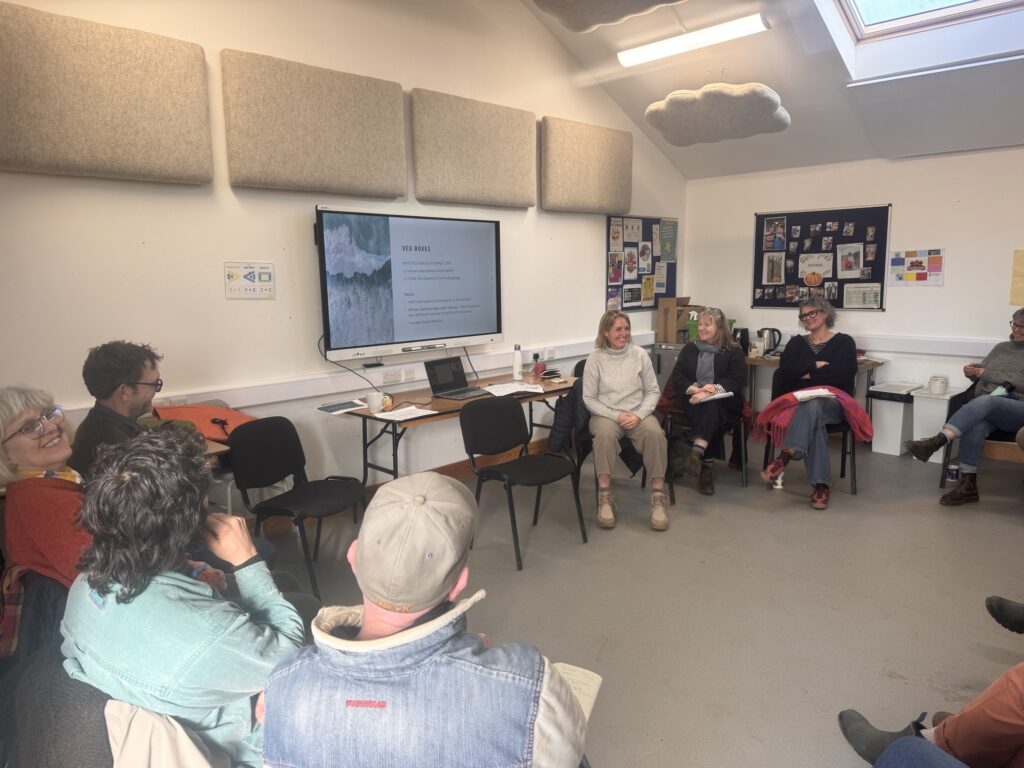
Claire and Emma shared insights into the highly successful WellFed project, which prescribes volunteer and cookery sessions alongside a weekly veg bag and recipe for people living with Type 2 diabetes. The session offered practical guidance on running activities and demonstrated how community growing spaces can play a vital role in improving both physical and mental health.
Train the Trainer refresher – Love Land, Penryn
The final event of the month took place at Love Land in Penryn, where a small group gathered for a Train the Trainer refresher session.
Eight participants came together to refresh their knowledge and share experiences of working alongside volunteers and peers. The session was relaxed and collaborative, focusing on techniques for creating effective skill-sharing sessions that are inclusive, participatory and rooted in agroecological values.
The aim was to build confidence and help participants reinvigorate the knowledge and facilitation skills they already use in their day-to-day community growing work. By sharing approaches and learning from one another, attendees left with new ideas for supporting volunteers and strengthening their local projects.
Building stronger networks
These February events showed the strength of Cornwall’s community growing movement and the value of creating spaces where growers can connect and learn from each other. Whether discussing farm-scale production, the health benefits of growing, or how best to pass on skills, each session reinforced the importance of collaboration.
Coming up next: Bosavern Community Farm – March 24
Our next Joining the Dots event will take place at Bosavern Community Farm, St Just, on March 24, focusing on how to run engaging and effective volunteer sessions.
Community growing projects rely on volunteers, and creating welcoming, well-structured sessions can make all the difference. This event will explore practical ways to organise volunteer days, share skills confidently, and create an inclusive environment where people feel valued and motivated to return.
As always, the session will centre on peer-to-peer learning, giving growers the chance to exchange experiences, ask questions and pick up ideas they can take back to their own projects.
If you’d like to get involved or hear about future sessions, keep an eye on Sustainable Food Cornwall’s social media channels or sign up to our newsletter at www.sustainablefoodcornwall.org.uk.